What goes wrong, and how to fix it
| Failure | Symptom | Fix |
|---|---|---|
| Unit tilted level or backward | Water pooling on the interior sill or running down the wall | Re-level with a slight outward pitch; check the base drain hole isn't blocked with debris |
| No sash bracket installed | Window creeps up; unit shifts forward over weeks | Install the supplied L-bracket into the upper sash track |
| Side panels not screwed to the frame | Whistling, bugs, visible daylight | Screw panels to the chassis flange, then foam the sash gap |
| Undersized for the room | Runs constantly, never reaches setpoint | Match BTU to square footage — 5,000 BTU tops out near 150 sq ft, 6,000 near 250 sq ft, 8,000 near 350 sq ft |
| Oversized for the room | Short-cycles, room feels cold and clammy | A too-big unit cools before it dehumidifies; size down or use a dry/eco mode |
| Extension cord in use | Breaker trips or unit resets | Plug directly into a wall outlet on a lightly loaded circuit |
| Dirty filter after a few weeks | Weak airflow, rising noise | Pull and wash the filter; several units flag this with a clean-filter alert |
| Sill flexes under load | Creaking, gap opening at the top rail | Add exterior support brackets rated for the unit's weight |
Quick answer: Installing a window AC is a two-hour job that most people finish in forty minutes, and the parts that go wrong are almost always the boring ones — an unsupported chassis, a sash that isn't locked down, or a unit tilted the wrong way so condensate drains onto your floor instead of outside. Measure your window opening (width and the minimum sash height) before you buy, get a second person for anything over about 50 pounds, and check that the outlet is on a circuit that isn't already carrying a microwave. Everything else is just following the bracket instructions in order.
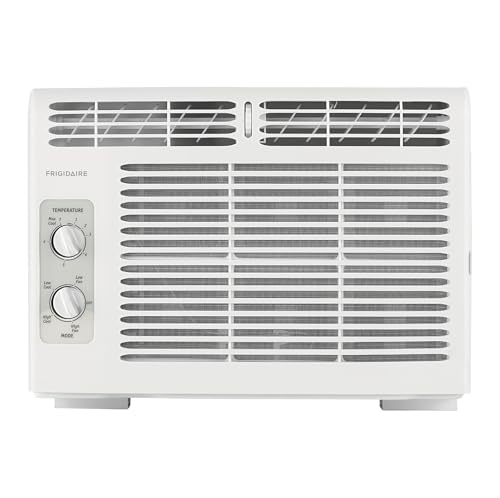
- Effortless Cooling: Achieve optimal comfort with customizable temperature settings and two fan speeds; Effortless Temperature Control helps to maintain your preset temperatures
- Easy Maintenance: Keep your air conditioner running efficiently with the easy-to-clean washable filter, designed to capture dust from the air for long-lasting performance
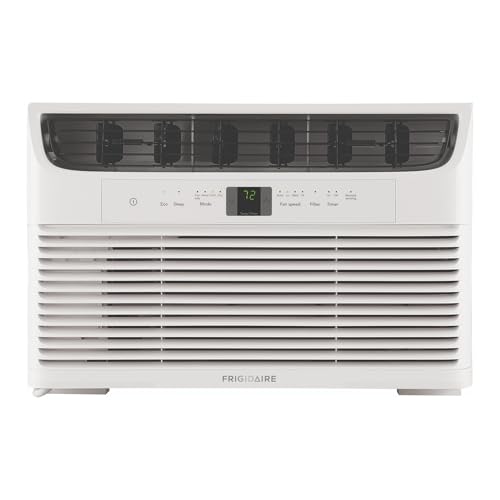
- Customizable Cooling: Achieve optimal comfort with custom temperature settings, 6-way directional airflow, and three different fan speeds
- Easy Maintenance: Effortlessly adjust settings with the remote control and keep your AC unit working efficiently with Clean Filter alerts that notify you when it's time to clean
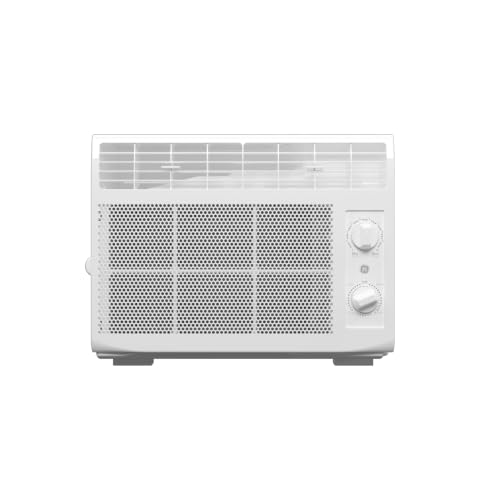
- BEST FOR SMALL ROOMS: Cools up to 150 sq ft efficiently with 5,000 BTU cooling power. Ideal for bedrooms, home offices, dorm rooms, workshops, and studio apartments. Compact 16.4"
- QUIET OPERATION - Quieter than many older window AC units, with 2 cooling modes (low 52 dBA for nighttime, high 56 dBA for rapid cooling) and 2 fan speeds for personalized
The install, step by step
1. Measure the window opening — all three numbers. You need interior width between the side jambs, the height of the opening when the lower sash is raised, and the depth of the sill. Manufacturers publish a fit range for a reason: the GE Window Air Conditioner 5,000 BTU AC Unit, for example, states it fits double-hung windows 27.125"–36" wide with a minimum height of 13.375". The Midea 12,000 BTU U Shaped Window Air Conditioner lists 22"–36" width and a 13.75" minimum height. Gotcha: people measure the glass, not the opening. Measure the opening.
2. Confirm your window type. Most of these units are built for double-hung windows — the kind where the bottom sash slides up. The Midea U-shaped model also covers single-hung windows. Casement (crank-out) and sliding windows need a different product category entirely; no amount of foam will make a standard chassis work there. Gotcha: a "sliding window" that slides side-to-side is not a double-hung window, regardless of what the listing thumbnail looks like.
Finding the right how to install window air conditioner comes down to matching the features to how you will actually use it.
3. Check the outlet before you lift anything. Window ACs want a dedicated-ish circuit. The GE unit lists a 440W draw, which is modest, but a bigger unit on a shared kitchen circuit will still trip a breaker when the compressor kicks in. Note also that the Frigidaire 5,000 BTU Window-Mounted Air Conditioner ships with an extra-long three-prong cord specifically so you don't reach for an extension cord. Gotcha: extension cords and power strips are the single most common cause of "my new AC keeps shutting off."
4. Clean and inspect the sill. Soft, rotted, or painted-shut wood will not hold a 60-pound appliance for a whole summer. Scrape it, check it with a screwdriver tip, and repair anything punky now.
5. Assemble the mounting hardware on the floor first. Every unit here ships with a kit — GE calls its version an EZ Mount kit with foam insulation, Midea uses a quick-snap bracket you install before setting the unit down. Read the sheet, lay the parts out, and dry-fit the side panels to the chassis before you're holding it in a window. Gotcha: side curtains often attach in a specific order relative to the top rail. Doing it out of order means taking it apart while it's balanced on a sill.
6. Set the unit in the opening — with help. Lift with your legs, rest the chassis on the sill, and keep one hand on it until it's screwed down. A 5,000 BTU unit like the GE (16.4" W x 13.4" D x 12.6" H) is a one-person job. A 12,000 BTU inverter unit is not.
7. Get the tilt right. Most fixed-chassis units need a slight downward pitch toward the outside so condensate runs out. Slight — a fraction of an inch, not a visible slope. Gotcha: modern sills are often already pitched outward. Adding a shim on top of an already-sloped sill can over-tilt the unit and stress the seals. Use a level, not your eyeball.
8. Lower the sash, lock it, and add the sash bracket. Bring the window down onto the top rail, then install the L-bracket or sash lock that came in the kit. This is what stops the window from being raised from outside and what keeps the whole thing from creeping forward over the season.
9. Extend the side panels and seal. Pull the accordion panels out to the jambs and screw them to the unit's frame. The Frigidaire 5,000 BTU model calls out adjustable side panels that extend to fit your window for a secure installation with proper airflow. Then stuff the gap between the upper and lower sash with the supplied foam strip.
10. Plug in, run it, and check for drips 30 minutes later. Cold air at the vent within a few minutes, water dripping outside (not inside) within half an hour, no rattle.
Spec and compatibility table
| Product | BTU | Coverage | Noise | Window fit stated | Controls | Price |
|---|---|---|---|---|---|---|
| Frigidaire 5,000 BTU Window-Mounted Air Conditioner | 5,000 | Up to 150 sq ft | 52 dBA | Adjustable side panels; exact range not stated | 2 fan speeds, auto restart | Check price on Amazon |
| Frigidaire 6,000 BTU Window Air Conditioner with Remote Control | 6,000 | Up to 250 sq ft | 52 dBA | Not stated | Remote, 3 fan speeds, Eco/Sleep/Dry, 24-hr timer | Check price on Amazon |
| GE Window Air Conditioner 5,000 BTU AC Unit | 5,000 | Up to 150 sq ft | 52 dBA low / 56 dBA high | Double-hung 27.125"–36" W, 13.375" min height | Mechanical dials, 10 temp settings, auto restart | Check price on Amazon |
| 6000 BTU Window Air Conditioner w/Remote Control | 6,000 | Up to 250 sq ft | Not stated | Most standard double-hung; exact range not stated | Remote, LED display, Auto-Cool, timer, auto restart | Check price on Amazon |
| Frigidaire 8,000 BTU Window Air Conditioner with Remote Control | 8,000 | Up to 350 sq ft | 54 dBA | Not stated | Remote, 3 fan speeds, Eco/Sleep/Dry, 24-hr timer | Check price on Amazon |
| Midea 12,000 BTU U Shaped Window Air Conditioner | 12,000 | Up to 550 sq ft | As low as 32 dBA | Single- or double-hung 22"–36" W, 13.75" min height | Wi-Fi app, Alexa/Google voice | Check price on Amazon |
When the fix is a new one
Sometimes the install isn't the problem — the unit is. If yours is loud enough to wake you, too small for the room, or old enough that it drips no matter how you level it, replacing is cheaper than fighting it.
GE Window Air Conditioner 5,000 BTU AC Unit for Small Rooms up to 150 sq ft with Manual Controls & 2 Cooling Modes for Bedroom or Living Room, Easy Install Kit, White — the one with published window dimensions
If your worry is "will it physically fit," this is the listing that answers it up front. The GE Window Air Conditioner 5,000 BTU AC Unit for Small Rooms up to 150 sq ft with Manual Controls & 2 Cooling Modes for Bedroom or Living Room, Easy Install Kit, White states a 27.125"–36" width range, a 13.375" minimum height, a compact 16.4" x 13.4" x 12.6" body, and an included EZ Mount kit with foam insulation. Mechanical dials, 440W draw, no manual draining under normal conditions.
Frigidaire 5,000 BTU Window-Mounted Air Conditioner, Cools Up to 150 Sq. Ft., Quiet Operation, Effortless Temperature Control, 2 Fan Speeds, Auto Restart, White — the cord-and-panel details that simplify a tricky window
The Frigidaire 5,000 BTU Window-Mounted Air Conditioner, Cools Up to 150 Sq. Ft., Quiet Operation, Effortless Temperature Control, 2 Fan Speeds, Auto Restart, White ships with an extra-long three-prong cord so a far-away outlet doesn't push you toward an extension cord, plus adjustable side panels that extend to fit the opening. Runs at 52 dBA with two fan speeds, a washable filter, and auto restart.
Frigidaire 6,000 BTU Window Air Conditioner with Remote Control, Cools Up to 250 Sq. Ft., Quiet Operation, Eco Mode, 3 Fan Speeds, Auto Restart, White — a step up in coverage without a step up in noise
For a room in the 150–250 sq ft range, the Frigidaire 6,000 BTU Window Air Conditioner with Remote Control, Cools Up to 250 Sq. Ft., Quiet Operation, Eco Mode, 3 Fan Speeds, Auto Restart, White still lists 52 dBA. It adds 6-way directional airflow, Eco and Sleep modes, Dry mode for humid rooms, a 24-hour timer, and clean-filter alerts.
6000 BTU Window Air Conditioner w/Remote Control, Cools up to 250 Sq. Ft — the lower-cost route to 250 sq ft
The 6000 BTU Window Air Conditioner w/Remote Control, Cools up to 250 Sq. Ft from GarveeHome covers the same 250 sq ft at $132.99, with an LED display, Auto-Cool mode that adjusts fan speed to room temperature, timer settings, and side panels plus mounting hardware for standard double-hung windows. Auto-restart brings back your settings after an outage. Noise level isn't stated — worth checking owner reviews on that point yourself before committing to a bedroom.
Frigidaire 8,000 BTU Window Air Conditioner with Remote Control, Cools Up to 350 Sq. Ft., Quiet Operation, Eco Mode, 3 Fan Speeds, Auto Restart, White — for the room your current unit can't keep up with
If your AC runs nonstop and never hits setpoint, you're undersized. The Frigidaire 8,000 BTU Window Air Conditioner with Remote Control, Cools Up to 350 Sq. Ft., Quiet Operation, Eco Mode, 3 Fan Speeds, Auto Restart, White is rated to 350 sq ft at 54 dBA, with the same 6-way airflow, Eco/Sleep/Dry modes, and 24-hour timer.
Midea 12,000 BTU U Shaped Window Air Conditioner, Cools up to 550 Sq Ft — a different install geometry entirely
The Midea 12,000 BTU U Shaped Window Air Conditioner, Cools up to 550 Sq Ft uses a U-shaped body so the window sash closes through the middle of the unit, which lets you still open the window and blocks outside noise — operation as low as 32 dBA. Install is a quick-snap bracket, set the unit on it, secure the sidearms. It's ENERGY STAR certified with DC inverter technology claimed at over 37% energy savings versus traditional units, Wi-Fi control via the SmartHome app, Alexa and Google voice support, and an anti-theft window lock. Fits single- or double-hung windows 22"–36" wide, 13.75" minimum height.
FAQ
Do I really need the outward tilt? Yes, on fixed-chassis units. Condensate collects in the base pan and needs somewhere to go. Note that some designs, like units that advertise no manual draining under normal conditions, manage moisture internally — but they still assume the unit isn't pitched backward into the room.
Can I install one alone? For a compact 5,000 BTU unit, usually. For anything larger, get help. The risk isn't just dropping it out the window — it's holding the weight one-handed while you fish for a screw.
Why is my window unit so loud? Compare the stated dBA figures before you assume it's broken. Units here range from 32 dBA up to 56 dBA on high, which is a very large real-world gap. If yours is rattling rather than humming, check that the side panels are screwed tight and the chassis isn't resting on a loose shim.
How often should I clean the filter? Monthly during heavy use is a reasonable habit. Every unit listed here uses a washable filter, and several will flag it for you with a clean-filter alert. A clogged filter shows up as weak airflow and a unit that suddenly seems louder.
Related guides
- Best home cooling, heating and fans - ceiling fans, tower fans, space heaters, misting fans, portable air conditioners, window air conditioners with High Value Assets
- Best home cooling, heating and fans - ceiling fans, tower fans, space heaters, misting fans, portable air conditioners, window air conditioners Industry Trends
- Best home cooling, heating and fans - ceiling fans, tower fans, space heaters, misting fans, portable air conditioners, window air conditioners with Limited History
Key Takeaways
- Choosing the right how to install window air conditioner means matching the key features to your specific needs and budget
- Read real customer reviews and check the return policy before you commit
- Compare value across models — the priciest option is not always the best fit