What goes wrong
| Failure | Symptom | Fix |
|---|---|---|
| Running Cooling mode with no hose | Cold air at the vent, room stays warm or gets warmer | Re-attach the exhaust hose and vent it outside, or switch to Fan/Dry mode if you only need air movement |
| Wrong hose thread direction | Hose won't screw onto the coupler or pops off | Check whether your coupler is clockwise or counter-clockwise and match the replacement hose thread |
| Hose diameter mismatch | Gaps at the coupler, air leaking, hose falls off | Measure the coupler; most units are 5.9" — buy a matching diameter |
| Unsealed window/wall gap | Cools briefly, then plateaus; unit runs nonstop | Add a window seal kit or foam to close the gap so hot exhaust can't re-enter |
| Dry mode with no drain line | Tank fills fast, unit shuts down | Connect the drain hose for continuous drainage in Dry mode |
| Long, kinked, or looping hose | Weak cooling, warm hose, compressor cycling hard | Shorten and straighten the run; keep it level |
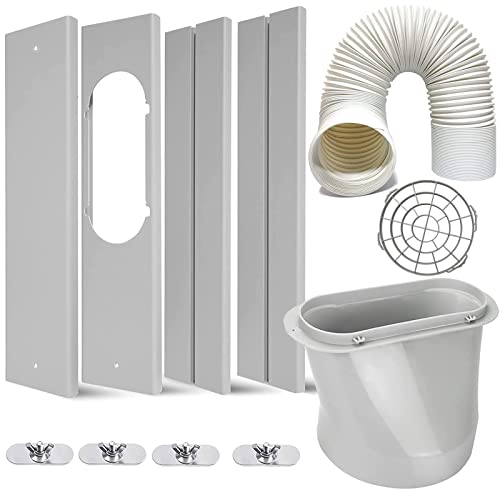
- 【Strengthen sealing】:This window kit keeps your room cool for longer and save electricity charges. It effectively diffuse the hot air out of the window, preventing warm air
- 【Reusable】:This Window seal kit is made of high-quality PVC, which anti-extrusion, anti-aging, and can be used year after year. Removed and stored space-saving when not in use
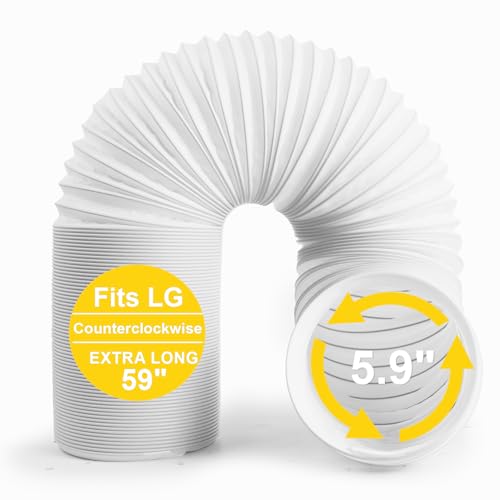
- 【5.9 Inch Counterclockwise】: Our 5.9 inch portable ac hose is anti-clockwise. Suitable for most portable air conditioners. Please measure and compare your portable air conditioner
- 【Built-in Steel Ring】: The portable ac vent hose is made of thickened polypropylene and high quality steel ring, durable and sturdy, good corrosion resistance, flexible, high
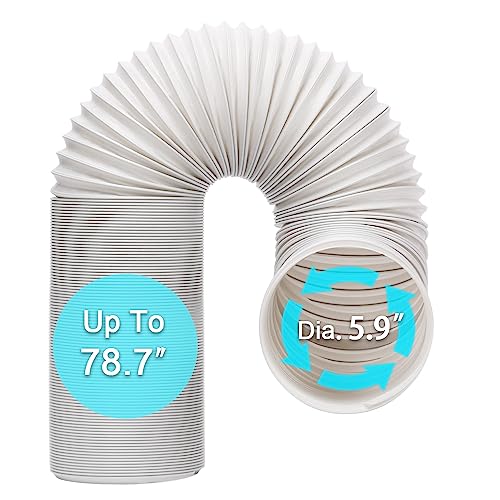
- STRONG & DURABLE: The exhaust hose is made of thickened polypropylene with a built-in high-quality steel ring, which has better heat resistance, wear resistance, aging resistance
- LONGER & 79 INCHES: Our ac hose has good telescopic function and flexibility. It can be stretched up to 79 inches, which is more convenient to use in large spaces. It is fully
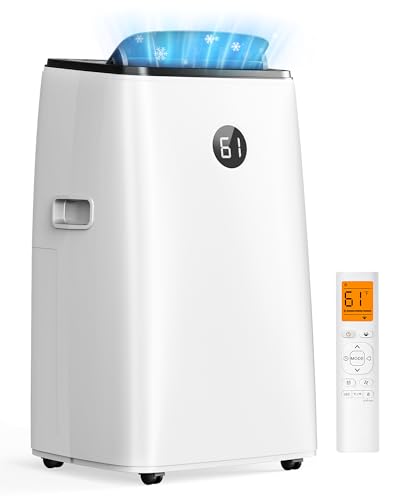
- DUAL-MOTOR DUAL HOSE INVERTER COOLING - This 16,000 BTU ASHRAE / 12,000 BTU SACC portable air conditioner combines dual motors, an inverter compressor, and a dual hose system to
- 3-IN-1 COOLING, FAN & DEHUMIDIFIER - In Cooling mode, the built-in self-evaporating system helps recycle condensate to reduce routine manual drainage. In Dehumidifier / Dry mode
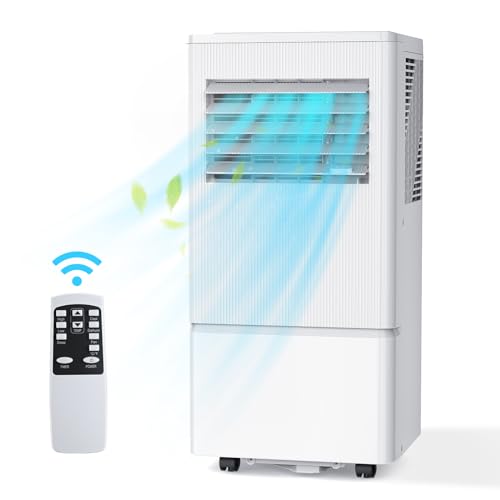
- Powerful 10,000 BTU Cooling: With 10,000 BTU (ASHRAE) cooling capacity, this portable air conditioner cools rooms up to 450 sq. ft. quickly and efficiently. Perfect for bedrooms
- Sleep-Friendly Design: This portable AC unit with built-in sleep mode ensures quiet operation for restful nights, while the 24-hour timer lets you schedule cooling to fit your
How to Set Up a Portable Air Conditioner Without a Hose
Quick answer: A compressor-based portable air conditioner cannot actually cool a room without venting its exhaust heat somewhere — running it hoseless just dumps that heat right back into the room, so the net temperature barely moves. What people usually mean by "no hose" is one of three things: running it in fan or dehumidifier mode (which legitimately needs no exhaust), venting through a wall/dryer port instead of a window, or replacing a busted window kit so the hose is out of sight. Below is how to do each correctly, and how to tell which one you actually want.
Why "no hose" almost never means "no exhaust"
Every portable AC with a compressor produces heat as a byproduct of cooling. That heat has to leave the room. If you disconnect the hose and run Cooling mode, the unit pulls warm air in, chills a little of it, and blows the leftover hot exhaust back into the same space. You'll feel a cold breeze right at the vent and a warmer room everywhere else. That's physics, not a defective unit.
So the honest goal is: vent the heat somewhere other than a standard window, or use a mode that produces no heat exhaust. Here's how.
Finding the right how to set up portable air conditioner without hose comes down to matching the features to how you will actually use it.
Step-by-step: the legitimate no-window-hose setups
1. Decide what you're really trying to avoid. Gotcha: If your problem is "I don't want an ugly hose in my window," you still need the hose — you just need a cleaner exit point or a better seal. If your problem is "I don't want any exhaust," you're limited to fan/dehumidifier mode. Pick before you buy parts.
2. For pure air movement or humidity control, use Fan or Dry mode. Gotcha: These modes genuinely need no exhaust hose. But Dry mode produces condensate. On a self-evaporating unit you may still need to attach a drain hose for continuous drainage during long Dry runs — that's a small water line, not the fat exhaust hose. Skipping it means the tank fills and the unit shuts off.
3. To vent without a window, find an alternate heat exit. Gotcha: Options are a dryer vent, a dropped-ceiling tile, a wall port, or a door cracked to an unconditioned space (garage, hallway). The hose diameter has to match — most units use a 5.9" diameter exhaust. Measure your unit's coupler and its thread direction before buying any replacement hose. Many are counter-clockwise thread and a clockwise hose simply won't seat.
4. Seal whatever opening you use. Gotcha: An unsealed gap lets the hot air you just pushed out sneak back in, which quietly erases most of your cooling. A window seal kit closes the gap around a sliding window and is reusable season to season.
5. Confirm the hose run is short and straight. Gotcha: A long, sagging, or kinked hose traps heat inside the tube, radiates it back into the room, and makes the compressor work harder. Keep it as short and level as the setup allows.
Spec & compatibility table
| Product | Type | Hose dia. | Length | Thread | Price |
|---|---|---|---|---|---|
| LEZIFU Window Seal Kit with Hose | Window seal + hose | 5.9" | Hose 59"; seal up to 63" (160cm) | Not stated | Check price on Amazon |
| Aukney Replacement Hose | Exhaust hose only | 5.9" | Extends to 59", retracts to 11" | Anti-clockwise | Check price on Amazon |
| BEWAVE Exhaust Hose Kit | Exhaust hose | 5.9" | Extends to 78.7", retracts to 14" | Anti-clockwise | Check price on Amazon |
| AGTANA 16000 BTU Dual Hose | Portable AC unit | Not stated | Not stated | Not stated | Check price on Amazon |
| Air Choice 10000 BTU | Portable AC unit | Not stated | Not stated | Not stated | Check price on Amazon |
When the fix is a new one
Sometimes the "no hose" struggle is really a sign your current unit or kit is fighting you. A few things worth weighing (in no particular order):
- If your window kit is the eyesore, the LEZIFU kit bundles a reusable PVC seal that adjusts up to 63" with a 59" hose, so you can tidy the whole window opening rather than leaving a gappy panel. It's the cheapest way to make an existing setup look and seal better.
- If your only issue is a cracked or missing hose, a plain replacement like the Aukney anti-clockwise hose or the longer BEWAVE hose (stretches to 78.7", handy when your vent point is across the room) gets you venting again — just match the 5.9" diameter and thread direction first.
- If you keep running hoseless because emptying the tank is a chore, a self-evaporating unit changes the math. The AGTANA 16000 BTU dual-hose recycles condensate in Cooling mode to cut manual drainage, and the Air Choice 10000 BTU ships with a no-drill window kit for sliding windows from 25.6" to 50" — less hose wrangling out of the box.
FAQ
Can any portable AC cool a room with no hose at all? Not in Cooling mode. The compressor generates exhaust heat that must leave the room. Hoseless, that heat returns and cancels the cooling. Only Fan and Dehumidifier modes truly need no exhaust.
What's the difference between the exhaust hose and a drain hose? The exhaust hose is the fat ~5.9" tube that carries hot air out. The drain hose is a thin water line for continuous condensate removal, mainly used in Dry mode — for example, the AGTANA unit connects a drain hose for continuous drainage in Dry mode.
Can I vent through a wall or dryer vent instead of a window? Yes, as long as the opening matches your hose diameter and you seal around it. A short, straight run works best; keep the hose from kinking or looping.
Why does my replacement hose keep falling off? Almost always a thread mismatch. Both the Aukney and BEWAVE hoses are anti-clockwise thread — check your coupler's direction and diameter before ordering.
Related guides
- About Gustelle: Our Editorial Team and Research Standards
- How Gustelle Researches Products
- Current Rates for Best home cooling, heating and fans - ceiling fans, tower fans, space heaters, misting fans, portable air conditioners, window air conditioners
Key Takeaways
- Choosing the right how to set up portable air conditioner without hose means matching the key features to your specific needs and budget
- Read real customer reviews and check the return policy before you commit
- Compare value across models — the priciest option is not always the best fit